
中文正文
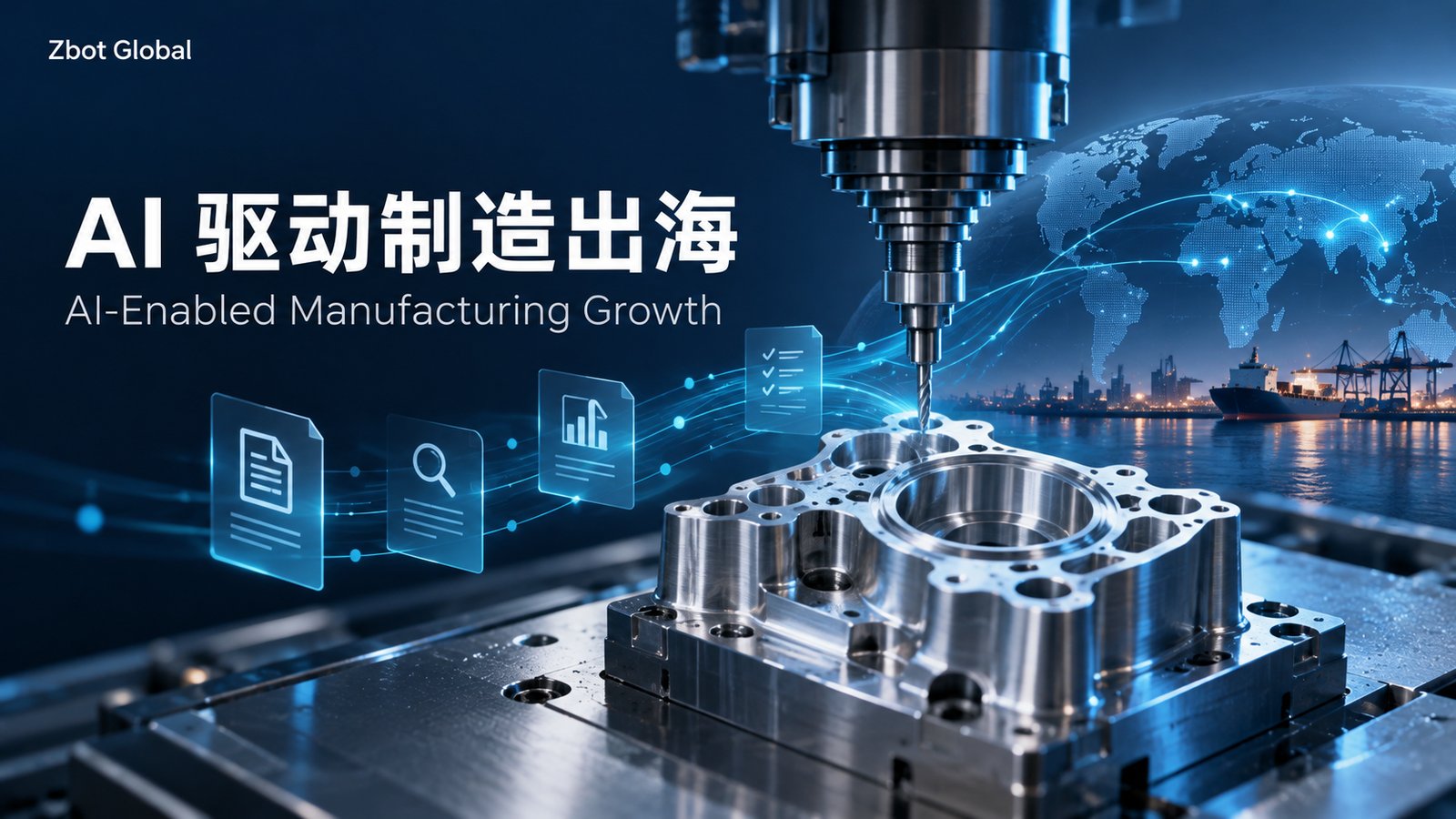
一家精密制造企业,如何把海外出货转化为可持续的主动获客系统。AI介入后的最近一年,企业业务复盘口径下的订单量已经超过此前五年累计。这个结果不能被简化成某一个工具单独带来的功劳。
先弄清楚,客户真正买的是什么
这家华南企业长期服务海外市场,业务覆盖快速模具、注塑、精密CNC加工、压铸、铝型材及硅胶成型等工艺。它有英文官网、有持续更新的LinkedIn,也有真实出货基础。但“具备海外业务”不等于“拥有可复制的海外获客系统”。当客户分布在医疗设备、机器人、汽车零部件和工业自动化等行业,只靠展会、转介绍或被动询盘,很难稳定放大。
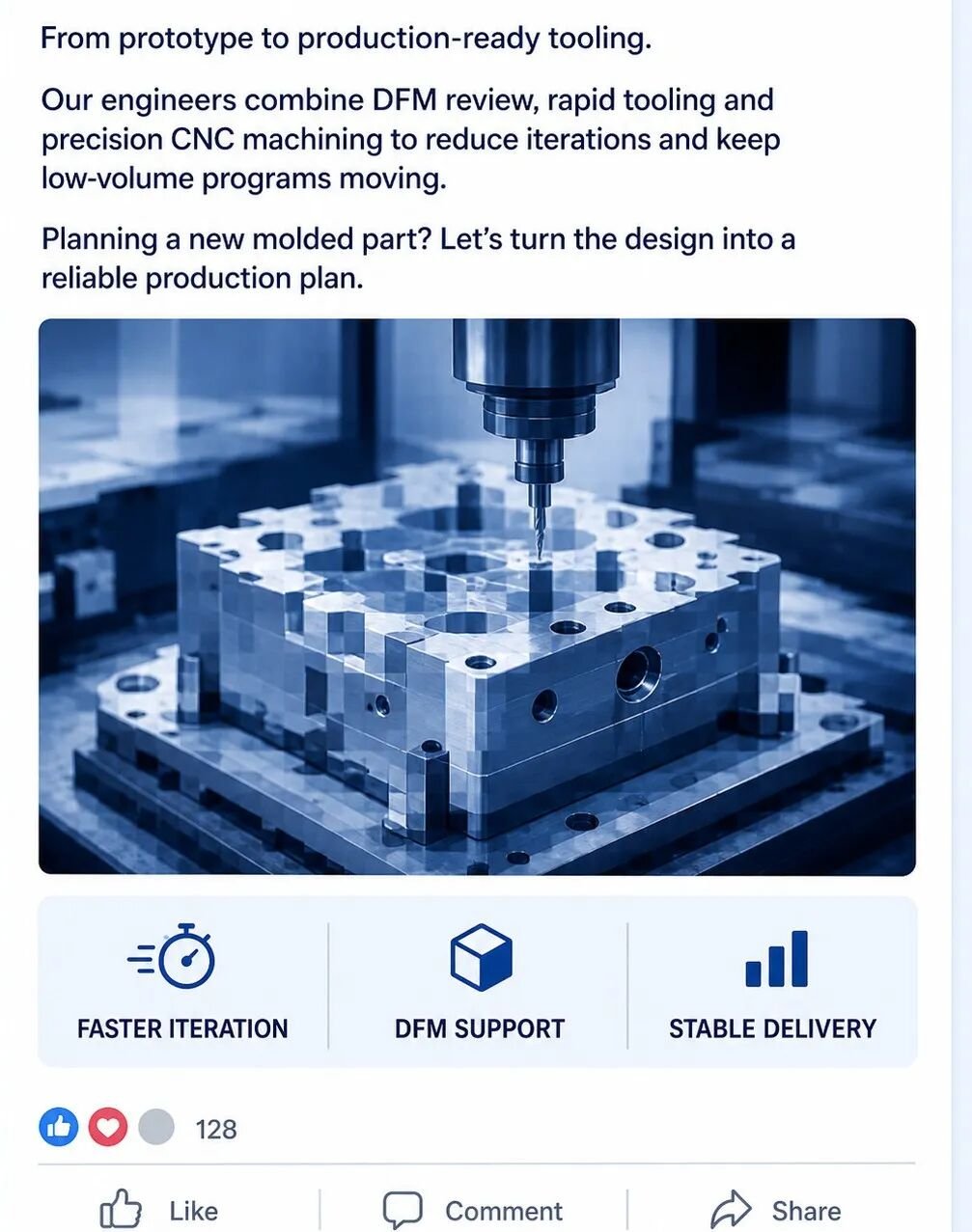
表面上看,企业卖的是模具和零部件。更深一层,它提供的是一条从设计验证、快速模具、小批量试产到量产衔接的制造路径。客户真正购买的,是更早发现DFM风险、更快获得功能件、降低开模与改模成本,并在设计、数量和交期变化时保持供应弹性。Zbot最终把价值主张压缩为四个关键词:快速验证、工程协同、柔性产能、量产衔接。
用官网、社媒和贸易数据交叉验证
官网验证“能做什么”。公开页面展示了多工艺能力,也把DFM、报价、生产与交付串成完整流程。它的作用,是降低海外采购第一次接触时的信息不对称。
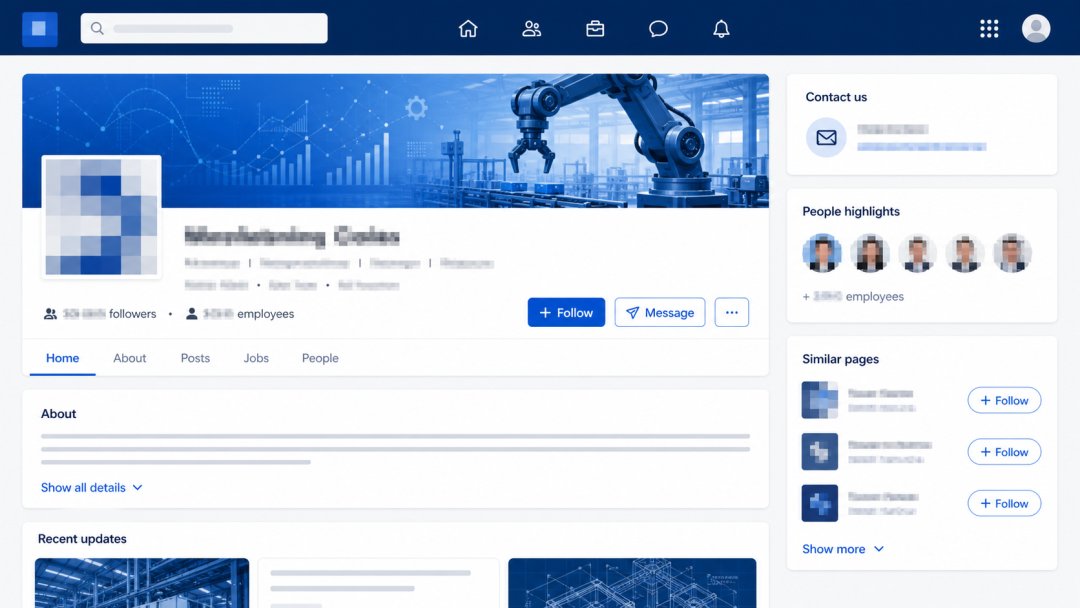
LinkedIn验证“如何被市场理解”。公开内容研究显示,企业持续发布快速模具、注塑自动化、材料选择、CNC智能化、低批量生产和行业趋势内容,方向与工程、产品开发和采购人员的真实决策问题高度相关。
公开贸易活跃度与企业业务复盘
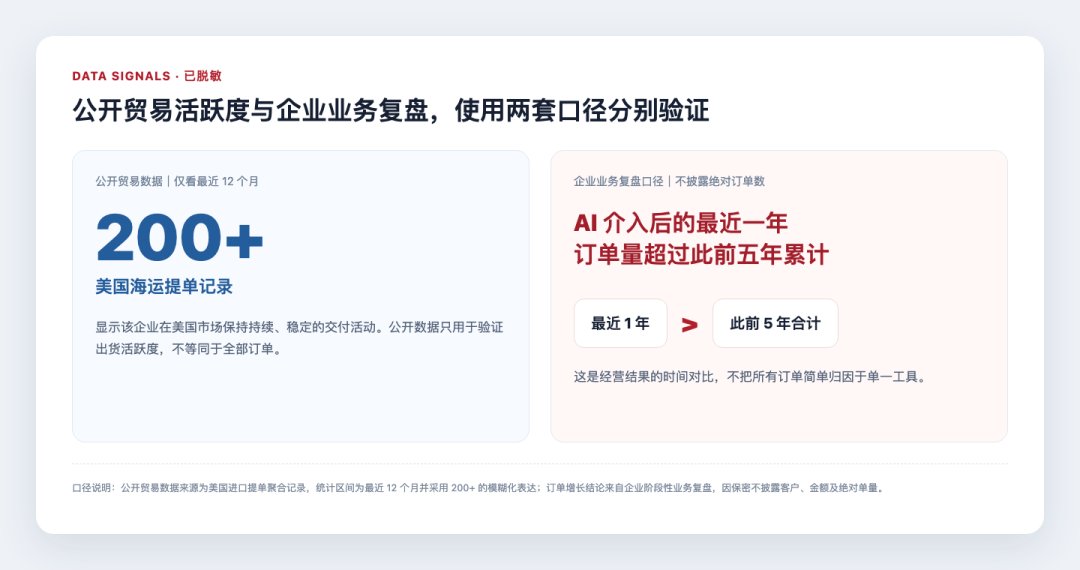
公开贸易数据验证“是否持续出货”。按最近12个月的美国进口海运提单口径,该企业拥有200条以上可见记录,显示其在美国市场保持持续、稳定的交付活动。公开提单只用于验证出货活跃度,不等同于全部订单,也不用于计算“过去五年订单量”。
真正的阶段性增长来自企业业务复盘:AI介入后的最近一年,订单量超过此前五年累计。这个结果更像是一个系统开始协同后的结果:市场研究更集中,目标客户更清楚,内容资产能被重复使用,触达节奏也不再依赖销售个人经验。
从“可能需要”缩小到“现在值得联系”
Zbot基于企业能力边界、公开市场信号和客户确认样本,建立了数百家高匹配企业池。目标市场集中在北美与欧洲,重点行业包括医疗设备、机器人与自动化、汽车及其一级供应链、工业自动化、航空与电动航空等。
客户规模并非越大越好。成长型硬件企业更可能需要快速验证、样件和桥接生产;成熟制造商则更关注稳定质量、供应链弹性、量产衔接和供应商转移能力。在岗位层面,主要触达人群包括采购与战略寻源、机械工程、产品开发、NPI与项目管理、供应商质量。真正影响制造外包决策的,往往不是一个“采购”标签,而是技术、交期、质量和供应风险共同作用的结果。
让每一次触达都有清晰任务
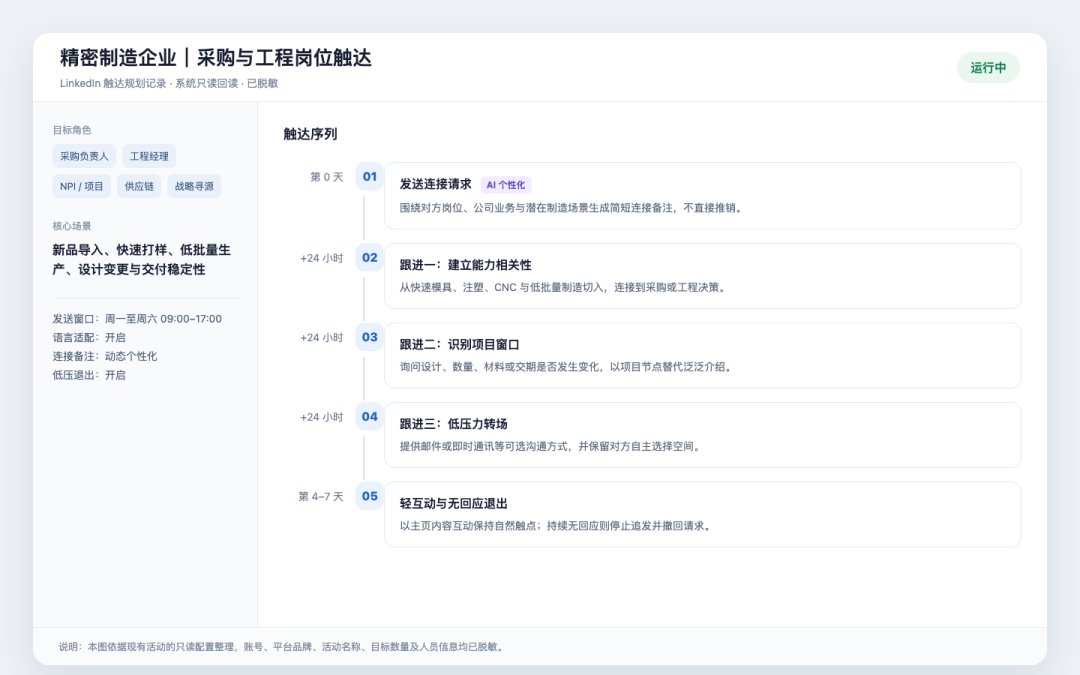
现有LinkedIn触达规划围绕采购、工程、NPI、供应链和战略寻源岗位,编排连接请求、三次间隔跟进、轻互动与无回应退出。
连接阶段:以同行交流和制造经验切入,降低陌生关系中的销售压力。首次跟进:围绕快速模具、注塑、CNC、DFM与产品开发支持,说明可以在哪些工程环节提供价值。场景跟进:抓住设计调整、数量变化、时间压缩等项目变化,强调从验证到生产衔接的连续支持。低压收尾:不反复追问报价或会议,保留行业交流关系,并让对方选择更方便的沟通方式。
精准,也包含“暂时不要追”
在医疗设备行业,如果供应商尚未公开具备特定医疗器械质量体系,应优先从原型、验证工装、设备外壳和非患者接触件切入,并在量产前确认材料追溯、验证和体系要求。在航空航天及受出口管制影响的场景,应优先筛选非受控的民用原型、通用工装和零部件,并确认终端用途。精准获客不只是“多找高分客户”,也包括主动排除不合规、不匹配或无法可靠交付的机会。
Zbot实际搭建了什么
Zbot实际搭建的是一条可以持续迭代的链路:把工艺能力翻译成海外客户可理解的业务价值;用官网、社媒、贸易数据和客户样本交叉验证市场定位;建立按国家、行业、规模、应用与合规边界筛选的客户池;定位真正参与决策的采购、工程、产品和质量角色;将连接、价值说明、场景跟进和低压收尾编排成触达节奏;保留人工复核节点,不让未经验证的判断直接进入对外沟通。
如果一家制造企业已经有海外客户、有官网、有产品,也参加过展会,却仍然依赖销售个人经验寻找客户,那么它缺少的通常不是更多数据,而是从研究、筛选、触达到复盘的统一工作流。Zbot希望让AI Agent承担大规模研究、判断和生成,让人保留最终审核与关键决策,把海外拓客从“偶尔有效”变成“可以持续运行”。
本文已对企业名称、品牌、人员、客户名单、账号及活动信息进行脱敏。数据说明:本文研究更新至2026年8月。公开贸易数据仅统计最近12个月,并采用“200+”的模糊化表达;订单增长结论来自企业阶段性业务复盘。公开提单、内部订单与触达活动属于不同口径,不做直接归因。
来源:Zbot出海AI外贸智能体(微信公众号) 原文链接:https://mp.weixin.qq.com/s/SdfGjDSltVbZ2ZnZbm-RrA
English Version
AI Empowers Chinese Manufacturing: Order Volume Exceeds the Previous Five Years
How a precision manufacturing company turned overseas shipments into a sustainable proactive customer acquisition system. In the most recent year following AI adoption, order volume, as measured in the company's business review, exceeded the total for the previous five years. This result cannot be attributed to a single tool alone.
Understand What Customers Are Really Buying
This South China company has long served overseas markets, offering rapid tooling, injection molding, precision CNC machining, die casting, aluminum extrusion, and silicone molding. It has an English-language website, an actively updated LinkedIn presence, and a record of actual shipments. But having an overseas business does not mean having a repeatable overseas customer acquisition system. With customers across medical equipment, robotics, automotive components, and industrial automation, relying only on trade shows, referrals, or inbound inquiries makes consistent growth difficult.
On the surface, the company sells molds and components. At a deeper level, it provides a manufacturing path from design validation and rapid tooling to small-batch trials and the transition to mass production. What customers really buy is earlier identification of design-for-manufacturing (DFM) risks, faster access to functional parts, lower tooling and mold modification costs, and supply flexibility when designs, quantities, or lead times change. Zbot distilled the value proposition into four terms: rapid validation, engineering collaboration, flexible capacity, and transition to mass production.
Cross-Validate with the Website, Social Media, and Trade Data
The website verifies what the company can do. Its public pages show capabilities across multiple processes and connect DFM, quoting, production, and delivery into a complete workflow. This helps reduce information asymmetry when overseas buyers first encounter the company.
LinkedIn verifies how the market understands the company. Research into its public content showed ongoing posts about rapid tooling, injection molding automation, material selection, intelligent CNC machining, low-volume production, and industry trends. These topics closely match the real decision-making concerns of engineering, product development, and procurement professionals.
Public Trade Activity and the Company's Business Review
Public trade data verifies whether shipments are ongoing. Based on U.S. ocean import bills of lading for the most recent 12 months, the company had more than 200 visible records, indicating sustained, consistent delivery activity in the U.S. market. Public bills of lading are used only to verify shipping activity. They do not represent all orders and are not used to calculate order volume for the previous five years.
The growth reported for this period comes from the company's business review: in the most recent year following AI adoption, order volume exceeded the total for the previous five years. This result is better understood as the outcome of a system beginning to work together: more focused market research, clearer target customers, reusable content assets, and an outreach cadence that no longer depends on individual salespeople's experience.
Narrow the Focus from “May Need It” to “Worth Contacting Now”
Using the company's capability boundaries, public market signals, and client-confirmed samples, Zbot built a pool of several hundred closely matched companies. Target markets centered on North America and Europe, with priority industries including medical equipment, robotics and automation, automotive and its tier-one supply chain, industrial automation, aviation, and electric aviation.
Larger customers are not always better. Growing hardware companies are more likely to need rapid validation, prototypes, and bridge production, while established manufacturers focus more on consistent quality, supply chain flexibility, the transition to mass production, and supplier transfer capabilities. Outreach primarily targets procurement and strategic sourcing, mechanical engineering, product development, new product introduction (NPI) and project management, and supplier quality. Manufacturing outsourcing decisions are often shaped by technology, lead times, quality, and supply risks together, rather than by a procurement title alone.
Give Every Outreach Step a Clear Purpose
The existing LinkedIn outreach plan targets procurement, engineering, NPI, supply chain, and strategic sourcing roles. It sequences connection requests, three spaced follow-ups, light engagement, and an exit when there is no response.
Connection: begin with peer exchange and manufacturing experience to reduce sales pressure in a new relationship. First follow-up: explain where value can be provided across engineering stages, including rapid tooling, injection molding, CNC, DFM, and product development support. Scenario-based follow-up: address project changes such as design revisions, quantity changes, and compressed timelines, emphasizing continuous support from validation through the transition to production. Low-pressure close: avoid repeatedly asking about quotes or meetings, maintain the industry relationship, and let the recipient choose a more convenient way to communicate.
Precision Also Means Knowing When Not to Pursue an Opportunity
In medical equipment, if a supplier has not publicly demonstrated a specific medical device quality system, the initial focus should be on prototypes, validation tooling, equipment enclosures, and components that do not contact patients. Material traceability, validation, and quality system requirements should be confirmed before mass production. In aerospace and situations affected by export controls, prioritize non-controlled civil prototypes, general-purpose tooling, and components, and confirm the end use. Precise customer acquisition includes proactively excluding opportunities that are non-compliant, poorly matched, or cannot be delivered reliably.
What Zbot Built
Zbot built a workflow that can be continuously refined: translate manufacturing capabilities into business value overseas customers can understand; cross-validate market positioning using the website, social media, trade data, and customer samples; build a customer pool filtered by country, industry, company size, application, and compliance boundaries; identify procurement, engineering, product, and quality roles that actually participate in decisions; sequence connections, value explanations, scenario-based follow-ups, and low-pressure closes into an outreach cadence; and retain human review checkpoints so that unverified judgments do not go directly into external communications.
If a manufacturer already has overseas customers, a website, products, and trade show experience, yet still relies on individual salespeople's experience to find customers, what it usually lacks is a unified workflow from research and screening to outreach and review. Zbot aims to let AI agents handle research, judgment, and generation at scale, while people retain final review and key decisions, turning overseas customer acquisition from something that works occasionally into something that can run continuously.
Company names, brands, personnel, customer lists, accounts, and campaign information have been anonymized. Data note: the research was updated through August 2026. Public trade data covers only the most recent 12 months and uses the approximate expression “200+.” The order growth conclusion comes from the company's business review for the period. Public bills of lading, internal orders, and outreach activities use different measurement scopes; no direct attribution is made.
Source: Zbot Global (WeChat Official Account: Zbot出海AI外贸智能体) Original article: https://mp.weixin.qq.com/s/SdfGjDSltVbZ2ZnZbm-RrA