
中文正文
展会解决的是“我认识你”,线上解决的是“我凭什么选你”。展会负责建立接触,独立站负责承载信息,SEO 和 GEO 负责让更多线上的人找到你。几件事一起做,展会的获客周期才能真正拉长。
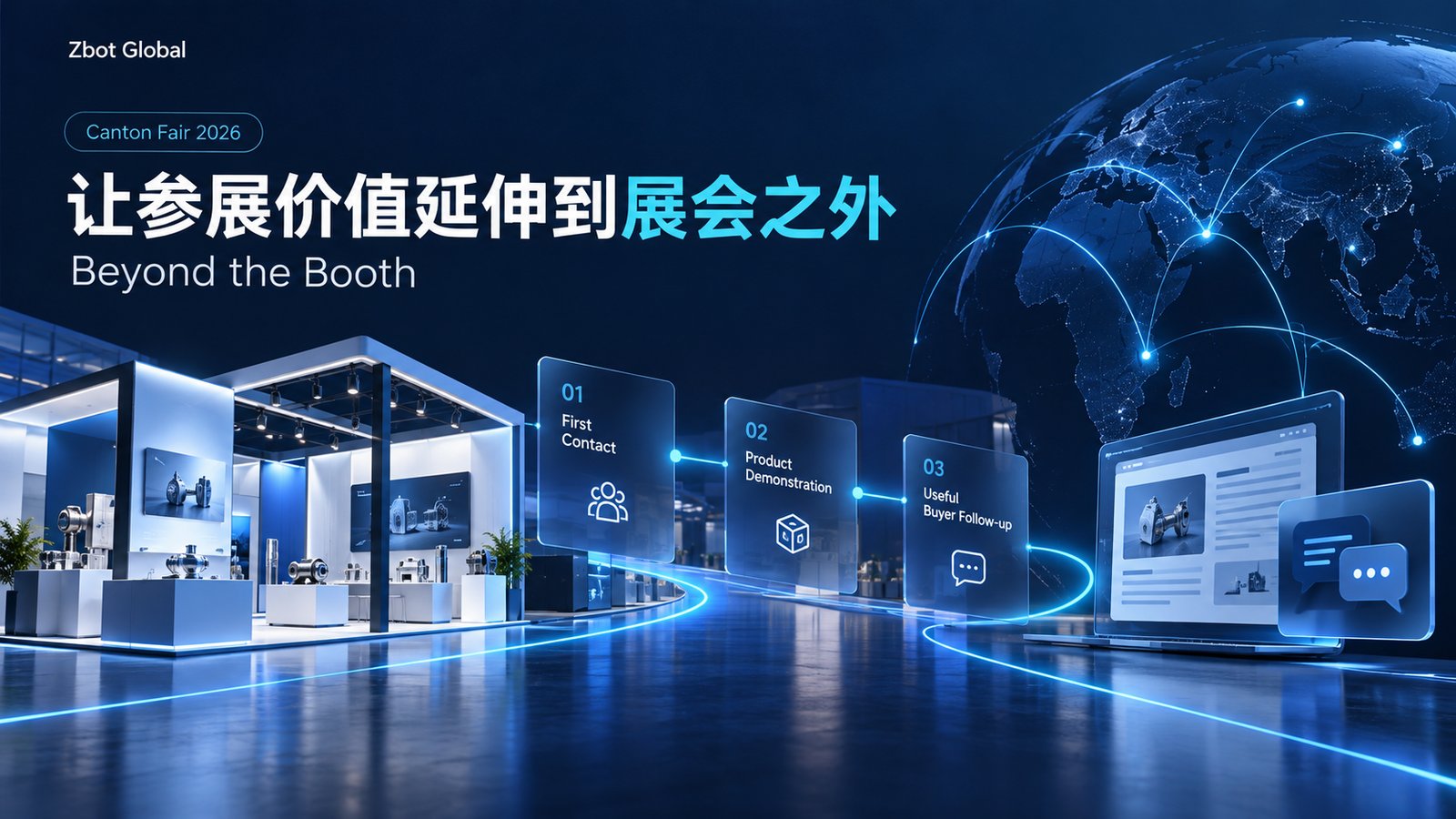
客户离开展位之后的 72 小时
一位德国采购商,在广交会上聊了三家中国工业设备制造商。展会结束,他回酒店。他不能跟老板说:“我在展会上遇到一家企业,感觉不错。”他需要能拿出手的东西:这家能生产什么?技术到什么程度?用在什么场景?有没有类似项目?交付和质量怎么保障?
采购决策需要证据:规格、认证、产能、案例、交付。这些信息越好找,你越容易被放进下一轮。有些企业展位人挤人,转化却很难看;有些企业现场并不张扬,客户却一路跟到下单。差别往往不在产品,而在客户离开之后,你还有没有能力继续证明自己。
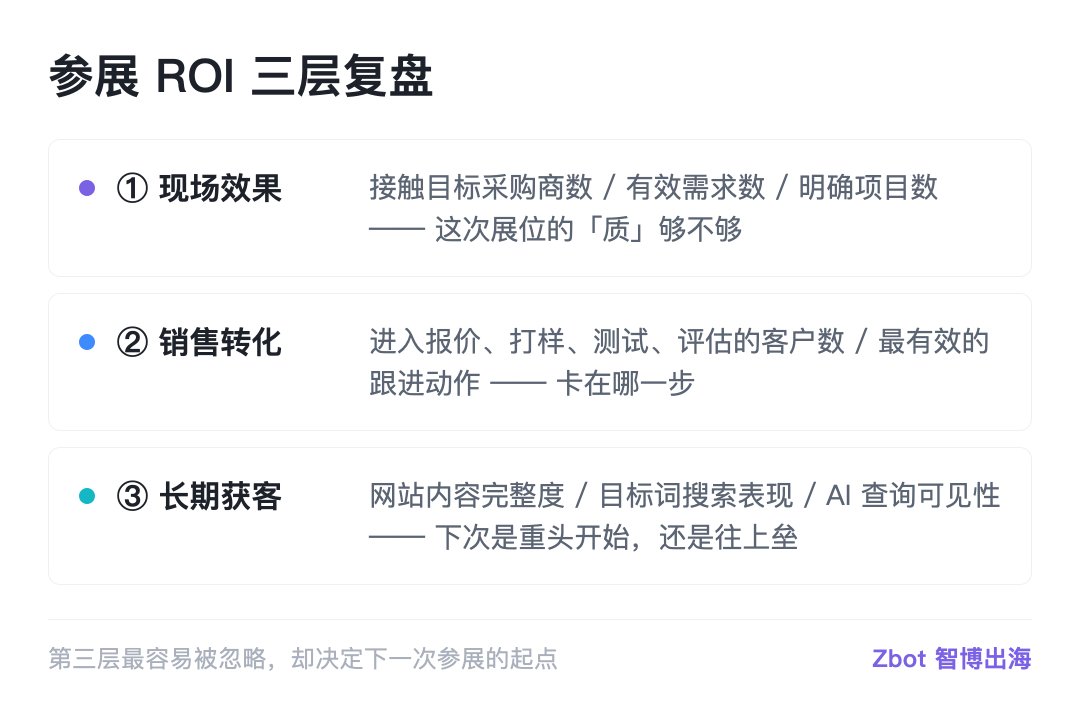
把参展当成一条链路:展前、展中、展后
与其把广交会当成一次孤立的营销动作,不如当成一条链路来设计。展前让客户知道你值得来,展中识别真实需求,展后把接触变成商机。
展前:展位、样品、宣传册都要准备,但还有一件更早的事——让目标采购商在来之前,就知道你是谁。通过邮件、LinkedIn、WhatsApp 联系老客户和潜在买家;补齐独立站重点产品信息;发布展会预告、新品介绍、应用案例,并开放技术预约。不要只说“欢迎莅临”,要具体到展什么、给谁用、什么规格、什么认证、能预约哪几场技术交流。
展中:除了公司、姓名、邮箱、WhatsApp,尽量记录关注的产品与应用场景、采购数量和时间、价格与技术要求、认证和交付要求;确认客户是调研、筛选,还是已经在采购;明确下一步要什么资料、约什么沟通,并按需求分层。三类客户用同一套跟进方式,效率必然低。
展后:先归拢客户资料、沟通记录和后续动作,再按需求发资料。关注技术参数的,发规格和技术文档;关注制造能力的,给生产、质检和相关案例;有明确项目的,优先推进报价、样品和技术会议。B2B 采购周期长,几天没回复不等于没兴趣。持续跟进的重点不是反复问“考虑得怎么样”,而是在合适的时间送真正有用的信息。
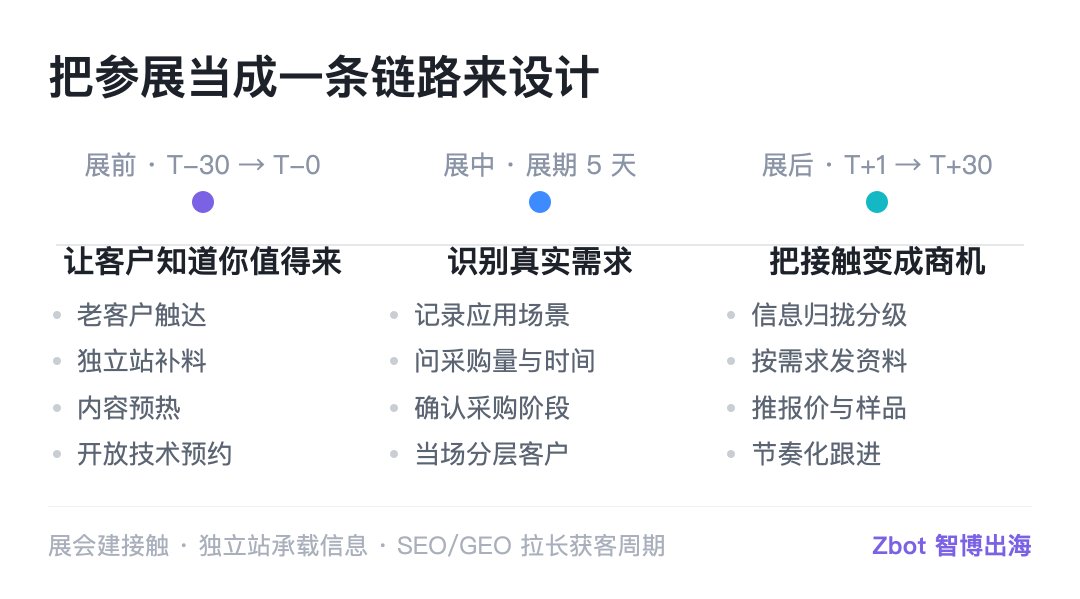
SEO 和 GEO,到底差在哪
网站建好了,还得让客户找得到。SEO 的目标是在搜索结果中获得曝光,围绕采购商的搜索需求建内容,覆盖有采购价值的需求词。比如工业泵制造商可以研究 chemical process pump manufacturer、customized industrial pump supplier、corrosion resistant pump for chemical plants。这些词合不合适,要结合产品、目标市场、搜索意图和竞争来看。比追流量更重要的,是覆盖真正有采购价值的需求。
GEO 的重点是让 AI 在回答里提到你。采购商使用 ChatGPT、Gemini 做产品研究和供应商筛选时,AI 会基于它能拿到的信息,整理产品特点或供应商线索。企业要把产品规格、技术能力、认证信息、应用案例、质量控制流程讲清楚,并给出可验证的证据,方便客户判断,也方便搜索引擎和 AI 理解企业做什么。
两者重点不同,但都需要长期做。GEO 不保证你被 AI 推荐,SEO 排名也不能靠发几篇文章就稳住。效果取决于网站底子、内容质量、竞争环境,还有平台自己的机制。展会建立接触,独立站承载信息,SEO 和 GEO 让更多线上的人找到你,共同拉长展会的获客周期。
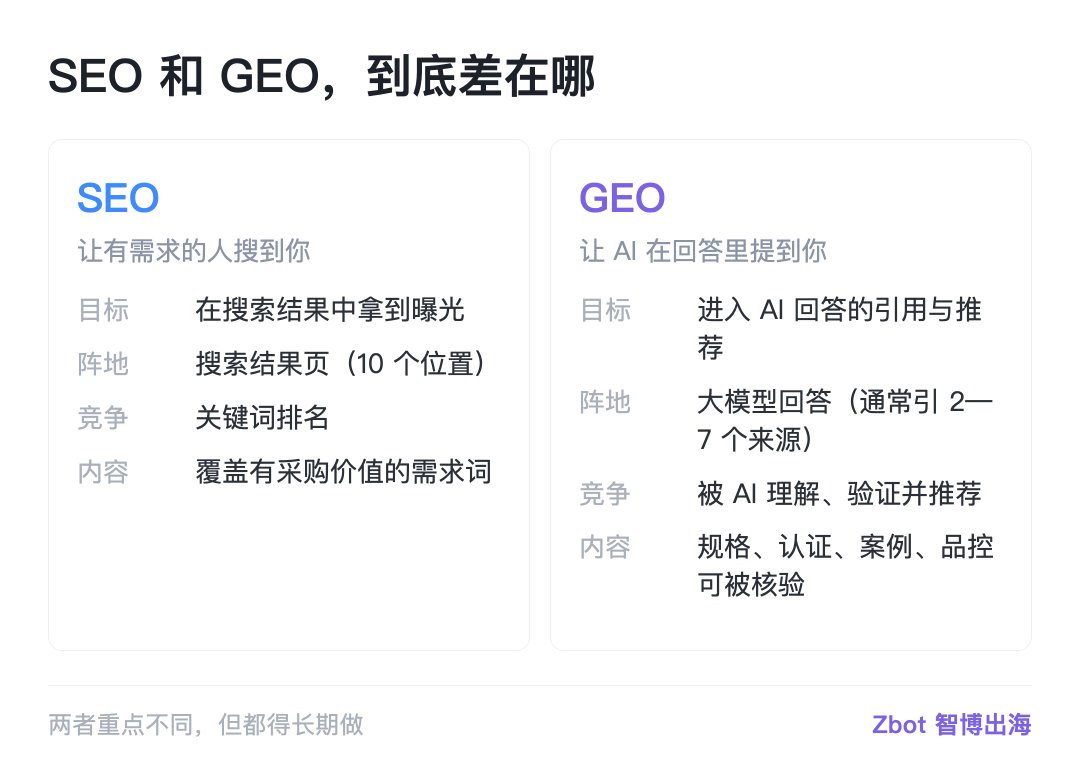
参展 ROI,不能只数收了多少张名片
展位费、搭建、样品运输、差旅、人力,每一项都是钱。如果只统计展会期间直接产生的订单,会低估那些要几周甚至几个月才转化的客户。复盘建议分三层:
现场效果:接触目标采购商数、有效需求数、明确项目数,判断这次展位的“质”够不够。销售转化:进入报价、打样、测试、评估的客户数,以及最有效的跟进动作,判断卡在哪一步。长期获客:网站内容完整度、目标词搜索表现、AI 查询可见性,判断下次是重新开始,还是往上叠加。
第三层最容易被忽略。订单能数,线上资产的积累要更长时间才看得出来。但它决定了下一次参展时,你是又一次从零开始找客户,还是已经有一套能持续运转的底子。
让这次见面,延伸到展会之外
Zbot 不承诺成交、不承诺回复率。AI 做调研和生成,人做事实审核和销售承接。机器不替你签单。
展会给你一次见面的机会。真正值得投入的,是让这次见面能延伸到展会之外。让客户在展会上认识你,在搜索里找到你,在比较中信任你,在要采购时想起你。展会的价值,不该止于闭馆那一刻。
来源:Zbot出海AI外贸智能体(微信公众号) 原文链接:https://mp.weixin.qq.com/s/my66GThSxot3-Q3xP9nF5w
English Version
Canton Fair 2026: How to Make Your Participation Count
Trade shows answer “I know you”; online information answers “Why should I choose you?” Trade shows establish contact, a company's own website carries the information, and SEO and GEO help more people find the business online. Working together, these activities can extend the customer acquisition cycle beyond the exhibition.
The 72 Hours After a Buyer Leaves Your Booth
A German buyer speaks with three Chinese industrial equipment manufacturers at the Canton Fair. After the exhibition, the buyer returns to the hotel. The buyer cannot simply tell a manager, “I met a company at the exhibition, and it seemed good.” The buyer needs evidence to present: What can the company manufacture? How advanced are its technical capabilities? Where are its products used? Has it handled similar projects? How does it ensure delivery and quality?
Procurement decisions need evidence: specifications, certifications, production capacity, case studies, and delivery capabilities. The easier this information is to find, the more likely you are to reach the next round. Some companies attract crowds to their booths but struggle to convert interest; others have a quieter presence yet maintain contact through to an order. The difference often lies in whether you can continue demonstrating your capabilities after the buyer leaves.
Treat Exhibition Participation as a Connected Process: Before, During, and After
Rather than treating the Canton Fair as an isolated marketing activity, design it as a connected process. Before the show, help buyers understand why you are worth visiting. During the show, identify real needs. Afterward, turn contact into opportunities.
Before the show: Prepare the booth, samples, and brochures, but also help target buyers learn who you are before they arrive. Contact existing customers and potential buyers through email, LinkedIn, and WhatsApp; complete the key product information on your own website; publish exhibition previews, new product introductions, and application case studies; and offer technical appointments. Go beyond “Welcome to our booth.” Explain what you will exhibit, who it is for, its specifications and certifications, and which technical discussions can be booked.
During the show: Beyond company names, contact names, email addresses, and WhatsApp details, record the products and applications of interest, purchasing quantities and timing, price and technical requirements, and certification and delivery requirements. Confirm whether the buyer is researching, shortlisting suppliers, or already purchasing. Agree on the information and discussions needed next, and group buyers by their needs. Using the same follow-up approach for all three types will reduce efficiency.
After the show: Consolidate customer information, conversation records, and next steps, then send materials based on each buyer's needs. Send specifications and technical documents to buyers focused on technical parameters; production, quality inspection information, and relevant case studies to those assessing manufacturing capabilities; and prioritize quotations, samples, and technical meetings for defined projects. B2B procurement cycles are long, and a few days without a reply do not necessarily mean a lack of interest. Continued follow-up should provide useful information at the right time.
What Is the Difference Between SEO and GEO?
Once a website is built, buyers still need to find it. SEO aims to gain visibility in search results by creating content around buyers' search needs and covering terms with purchasing relevance. For example, an industrial pump manufacturer could research “chemical process pump manufacturer,” “customized industrial pump supplier,” and “corrosion resistant pump for chemical plants.” Their suitability depends on the products, target markets, search intent, and competition. Addressing real purchasing needs matters more than simply pursuing traffic.
GEO focuses on helping AI mention your business in its answers. When buyers use ChatGPT or Gemini for product research and supplier screening, AI draws on the information available to it to summarize product features or identify supplier leads. Companies should clearly describe product specifications, technical capabilities, certifications, application case studies, and quality control processes, supported by verifiable evidence. This helps buyers assess the business and helps search engines and AI understand what it does.
The two approaches have different priorities, but both require sustained work. GEO does not guarantee an AI recommendation, and publishing a few articles does not secure stable SEO rankings. Results depend on the website's foundations, content quality, competition, and platform mechanisms. Trade shows establish contact, the company's website carries information, and SEO and GEO help more people find the business online. Together, they extend the customer acquisition cycle beyond the exhibition.
Exhibition ROI: Count More Than Business Cards
Booth fees, construction, sample shipping, travel, and staffing all cost money. Counting only orders generated directly during the exhibition understates the value of buyers who take weeks or months to convert. Review results at three levels:
On-site results: Count target buyers contacted, qualified needs, and defined projects to assess the quality of the booth's results. Sales conversion: Count buyers moving into quotations, sampling, testing, and evaluation, and identify the most effective follow-up actions and where progress stalls. Long-term customer acquisition: Review website content completeness, target search term performance, and visibility in AI queries to determine whether the next exhibition starts from scratch or builds on existing progress.
The third level is easiest to overlook. Orders can be counted, while the accumulation of online assets takes longer to become visible. Yet it determines whether the next exhibition begins with finding buyers from zero or builds on a foundation that can keep operating.
Extend the Meeting Beyond the Exhibition
Zbot does not promise closed deals or response rates. AI conducts research and generates materials; people review the facts and handle sales follow-up. Machines do not close deals on your behalf.
An exhibition gives you an opportunity to meet. What merits continued investment is extending that meeting beyond the exhibition: helping buyers get to know you at the show, find you through search, trust you when comparing suppliers, and remember you when they are ready to purchase. The value of an exhibition should continue after its doors close.
Source: Zbot Global (WeChat Official Account: Zbot出海AI外贸智能体) Original article: https://mp.weixin.qq.com/s/my66GThSxot3-Q3xP9nF5w